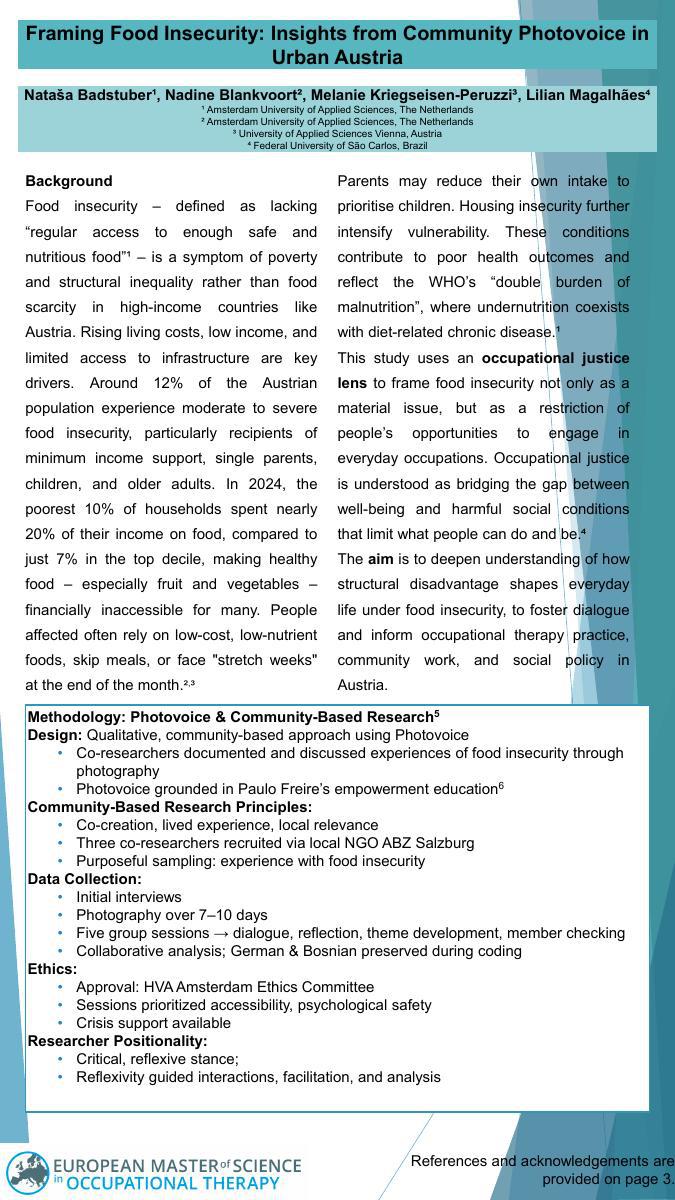
Introduction/Rationale: Food is deeply embedded in cultural, social, and political contexts, shaping both personal and collective identity. However, access to sufficient and nutritious food is not guaranteed for everyone. The World Health Organization defines food security as a fundamental human right and a key factor in achieving Sustainable Development Goal 2. Despite global efforts, structural factors such as economic conditions and environmental changes continue to influence food availability and affordability.
In Austria, 12% of the population experiences moderate to severe food insecurity, limiting their ability to access nutritious meals. Over four percent face severe food poverty, occasionally skipping meals. Community food initiatives have emerged to address these challenges, promoting local engagement and alternative food access. Understanding how individuals navigate food insecurity within these initiatives provides insights into potential support structures and community-based approaches.
Objectives: To document experiences and coping mechanisms related to food insecurity among participants of community food initiatives in Austria.
Methods/Approach: This qualitative study employs a photovoice methodology, where participants recruited through a local NGO share their experiences via semi-structured interviews and photovoice sessions. Thematic analysis will identify key themes. Ethical approval will be obtained through the University of Applied Sciences in Amsterdam.
Results/Practice Implications: Preliminary findings will explore participant narratives and photographic data, offering insights into personal and community impacts of food insecurity.
Significance to Occupational Therapy: This research highlights how occupational therapists can use community-based research design methods to empower individuals and promote inclusive, sustainable practices addressing food insecurity.
