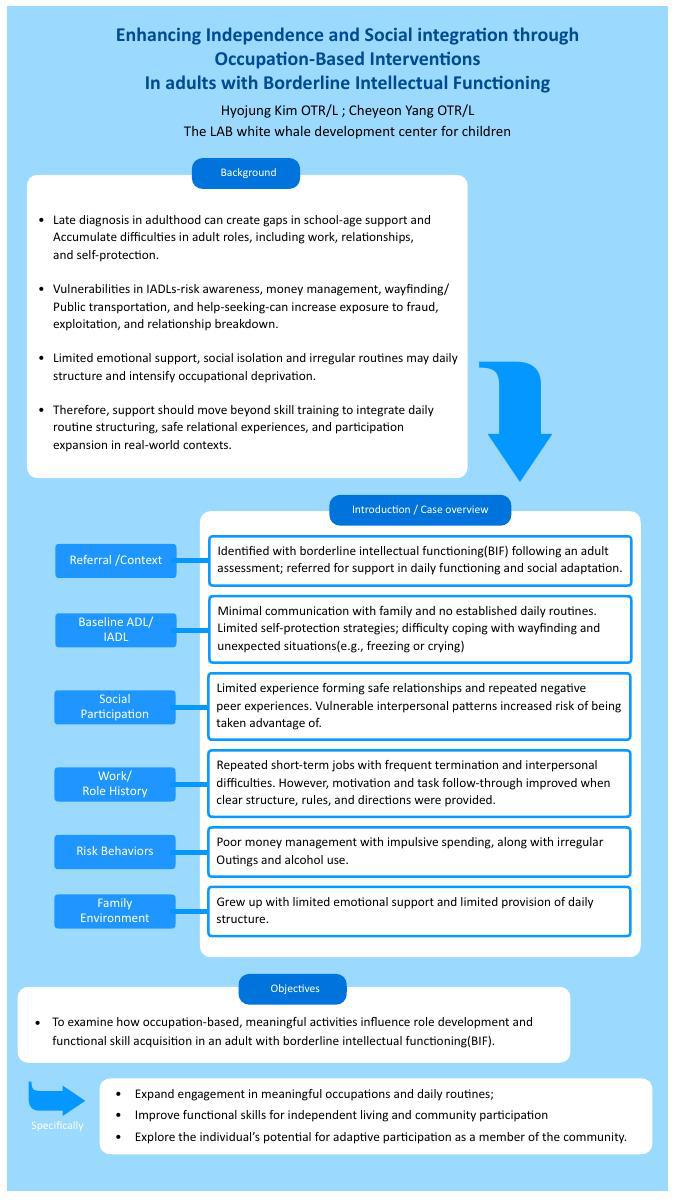
Introduction / Rationale: Independent living and social participation are essential for all individuals. However, adults with borderline intellectual functioning struggle with independence and social relationships, making them vulnerable to increasing social demands. Occupation-based interventions support skill acquisition and generalization through meaningful activities, promoting transition to independent living.
Objectives: This study examines the impact of occupation-based activities on skill development and social integration in adults with borderline intellectual functioning, enhancing functional abilities and societal adaptation.
Methods / Approach: Over 18 months, adult males with borderline intellectual functioning participated in weekly occupation-based activities (90 minutes/session) to foster social relationships and skill development. Caregiver interviews, client interest checklists, and COPM assessments evaluated intervention effectiveness through pre- and post-analysis.
Results / Practice Implications: Findings indicate improved skill acquisition and expanded occupational engagement across work, leisure, self-care, and instrumental activities. Clients demonstrated increased independence in meaningful occupations, particularly in work and money management.
Conclusion / Contribution to the occupational therapy profession: This study highlights the effectiveness of occupation-based interventions in promoting skill acquisition, autonomy, and social integration in adults with borderline intellectual functioning, reinforcing their role in enhancing independent living and societal participation.
