
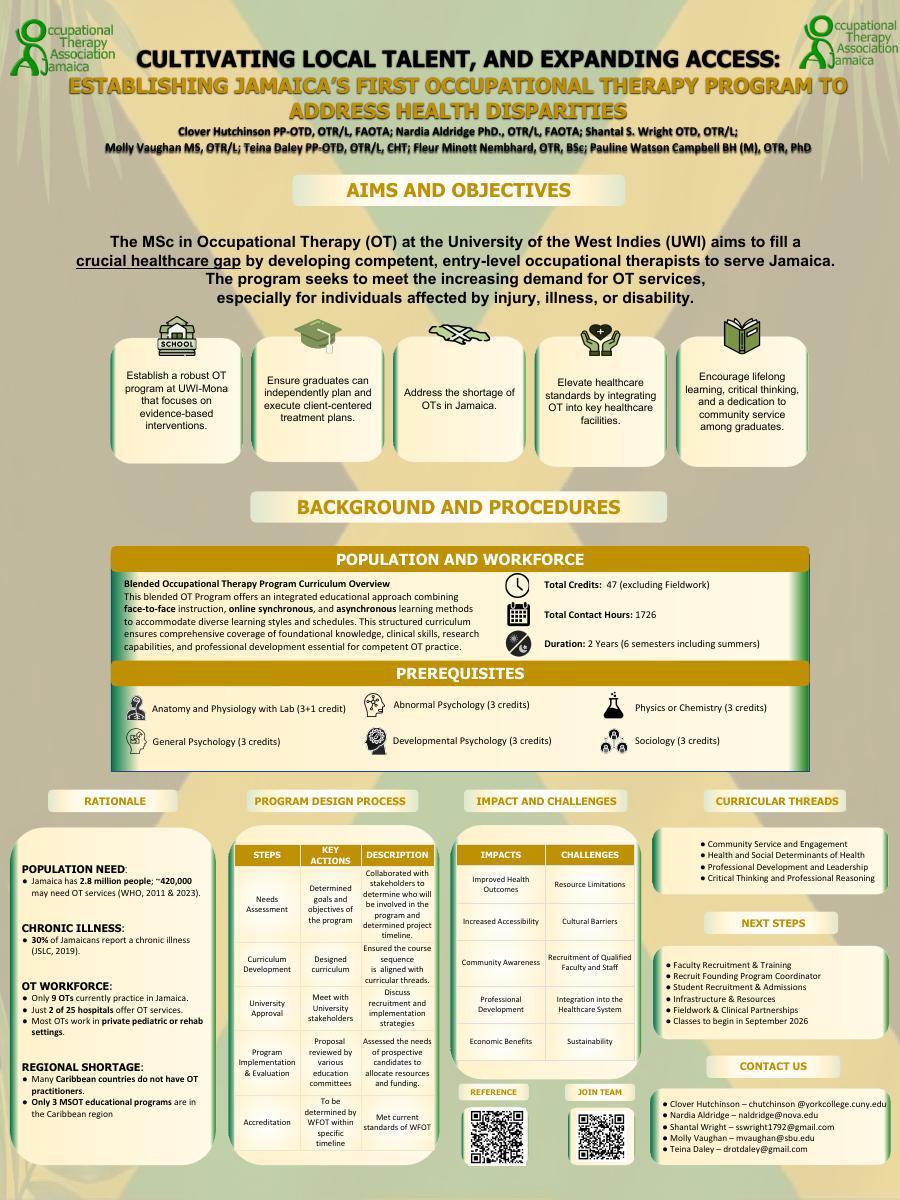
Introduction / Rationale: Jamaica, a nation of over 3 million people, has only nine occupational therapists, five of whom are Jamaican nationals trained abroad. This shortage limits OT access, contributing to significant health disparities, with an estimated 500,000 individuals potentially benefiting from services. The Jamaica Disabilities Act of 2022 and Vision for Health 2030 prioritize inclusive healthcare, rehabilitation, and social participation, aligning with the United Nations Convention on the Rights of Persons with Disabilities, of which Jamaica is a party.
To address this gap, the University of the West Indies will launch Jamaica’s first Master of Occupational Therapy program, aiming for WFOT accreditation. This initiative will train local therapists, improving healthcare access, rehabilitation, and long-term health outcomes.
Objectives: Assess the expected impact of Jamaica’s first MOT program on healthcare and OT accessibility, considering global trends.
- Identify strategic, sustainable initiatives to expand OT services in Jamaica, fostering global collaboration and health equity.
Methods / Approach: A blended curriculum of 17 core courses, two Level II fieldwork placements, and a competency exam will be implemented at the Caribbean's largest university system. Faculty recruitment will target the Caribbean diaspora and other professionals.
Results / Practice Implications: This program will expand and sustain access to OT services, strengthen workforce development, and promote health equity. OT professionals can contribute through mentorship, leadership, teaching, and fieldwork supervision.
Conclusion: The establishment of Jamaica’s first MOT program represents a transformative shift in OT, in Jamaica’s healthcare system, addressing historical service gaps and fostering greater inclusion and accessibility.