
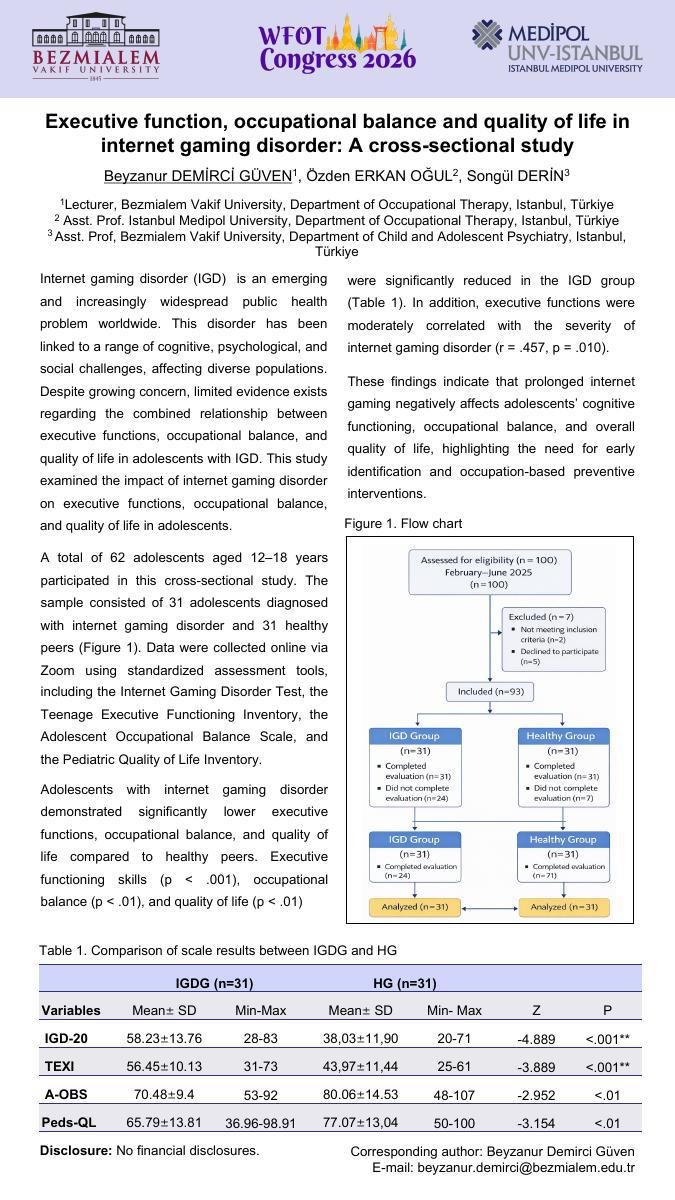
Introduction / Rationale: Internet gaming disorder is an emerging and increasingly widespread public health problem worldwide. This disorder has been linked to a range of cognitive, psychological, and social challenges, affecting diverse populations.
Objectives: To investigate the effect of internet gaming disorder on executive functions, occupational balance and quality of life in adolescents.
Methods / Approach: The study employed a cross-sectional survey design and was conducted online via Zoom. A total of 62 adolescents, including 31 diagnosed with internet gaming disorder and 31 healthy peers aged 12–18 years, were included. Data were collected using a demographic questionnaire, the Internet Gaming Disorder Test, the Teenage Executive Functioning Inventory, the Adolescent Occupational Balance Scale, and the Pediatric Quality of Life Inventory.
Results / Practice Implications: Executive functioning skills (p<.001), occupational balance (p=.003) and quality of life (p=.002) of adolescents with internet gaming disorder were statistically significantly lower than those of healthy adolescents. The executive functions (r=.457, p=.010) were found to be statistically correlated with the level of internet gaming disorder in adolescents with internet gaming disorder.
Conclusion / Contribution to the occupational therapy profession: The findings of this study indicate that prolonged internet gaming negatively impacts executive functions, occupational balance, and quality of life in adolescents with internet gaming disorder. By highlighting the effects of this increasingly prevalent issue, the study underscores the need for preventive measures and targeted interventions to support the well-being of the younger generation.