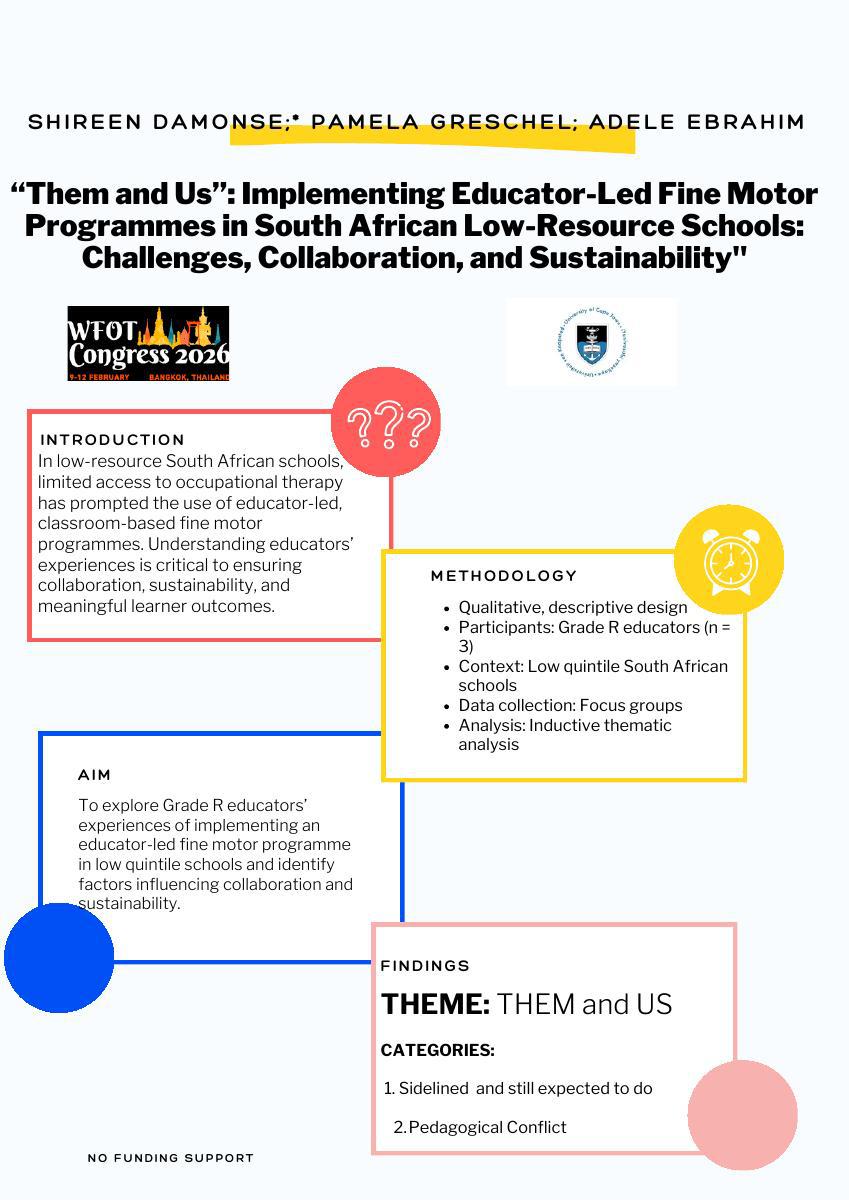
Introduction / Rationale: Children in South African low quintile schools face multiple learning barriers, impacting on their academic performance, particularly in handwriting profieciency. Due to limited occupational therapy resources, final-year students from the University of Cape Town were placed in these schools. They collaborated with Grade R educators to train them in implementing an educator-led, classroom-based fine motor program. This intervention was informed by evidence supporting the effectiveness of collaborative andcontextually relevant approaches to addressing educational challenges. The program aimed to enhance handwriting skills and provide sustainable fine- motor support in schools with limited resources.
Objectives: The objectives were to explore educators' experiences implementing an intervention, identifying supporting and hindering factors, evaluating the training’s effectiveness, assessing the intervention's impact on curriculum outcomes, and examining its potential for sustainability.
Methods / Approach: A qualitative, descriptive study explored Grade R educators' perspectives on a fine motor skills programme. Three educators were purposefully selected and trained and subsequently participated in focus groups, with data analyzed inductively to generate themes and categories.
Results / Practice Implications: The theme “Them and us” highlighted the divide between all stakeholders involved in the process, a process fraught with challenges. Exclusion, a persistent lack of communication, poor role clarification, and resistance to change, resulted in both the educators and students missing out on opportunities for collaboration and teamwork.
Conclusion / Contribution to the occupational therapy profession: South African Educational Policy promotes therapists integrating services within classrooms and homes through partnerships with educators and parents. Successful collaboration relies on investing in role clarity and building strong partnerships to enhance learners' occupational engagement and drive positive change.
