
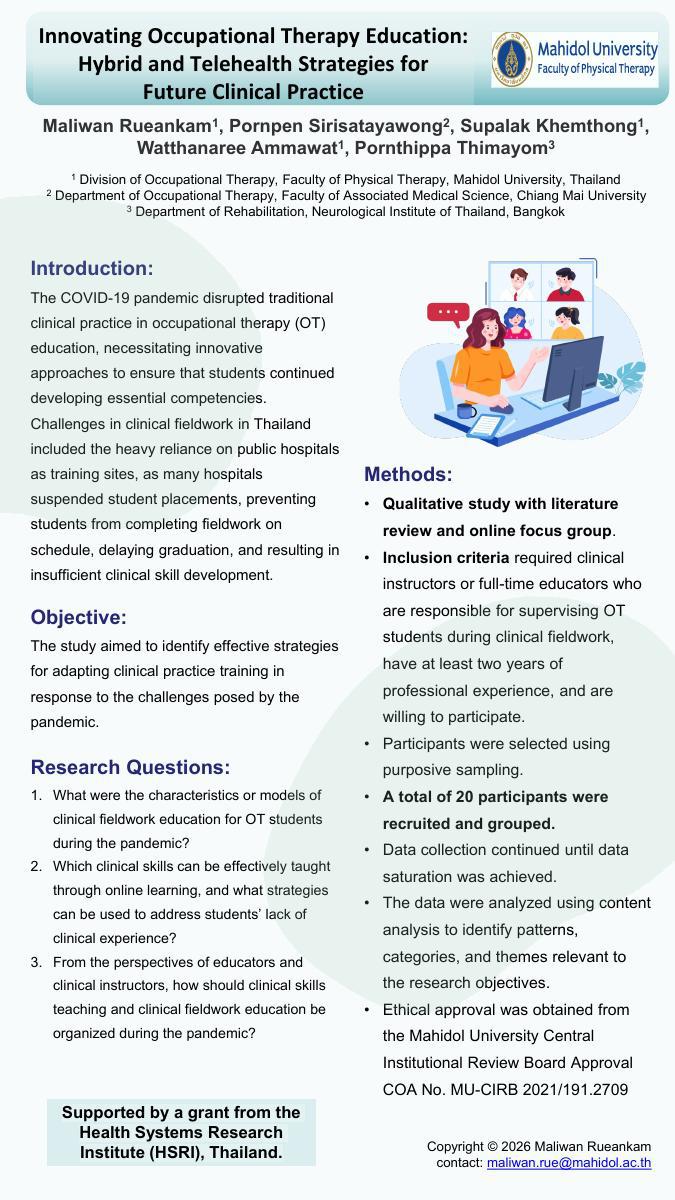
Rationale: The COVID-19 pandemic disrupted traditional clinical fieldwork in occupational therapy (OT) education, necessitating innovative approaches to ensure students continued developing essential competencies.
Objective: The study aimed to identify effective strategies for adapting clinical training in response to the challenges posed by the pandemic.
Methods: This qualitative study explored alternative clinical practice education models through a literature review and online in-depth interviews with ten educators from two universities and ten clinical instructors from pandemic zone hospitals.
Findings: The study identified key adaptations in clinical education, including hybrid training models that combined onsite and online learning. Essential clinical skills for OT students required during the pandemic were categorized into four main areas: (1) infection prevention and control, (2) communication and technology skills, (3) telehealth service implementation, and (4) occupation-based activity analysis in real-life client contexts. Online-based learning approaches, such as video-based case simulations, telehealth observation, and problem-based learning, were found effective in developing certain skills. However, hands-on competencies such as therapeutic relationship building, real-time problem-solving, and physical rehabilitation techniques could not be fully replaced by online methods.
Contribution to the occupational therapy profession: This study underscores the need for sustainable, technology-enhanced clinical education models in OT. By embracing innovation for change, OT education can evolve to equip future professionals with adaptive, technology-integrated skills, ensuring high-quality communication skills and client-centered care despite external disruptions. The findings advocate for the continued development of hybrid and telehealth-based learning frameworks to future-proof OT clinical training.