
Introduction:
Stroke is a leading cause of disability, with the subacute period offering a critical window for recovery due to heightened neuroplasticity. However, hospital rehabilitation environments are often understimulating, with limited opportunities for engagement in meaningful activities and potentially hindering outcomes. Integrating leisure and music activities in the hospital environment may enhance recovery by promoting active participation.
Objectives:
To evaluate the effectiveness of an enriched intervention incorporating group-based leisure activities and music therapy on functional recovery, neuroplasticity biomarkers, and its feasibility for clinical implementation.
Methods:
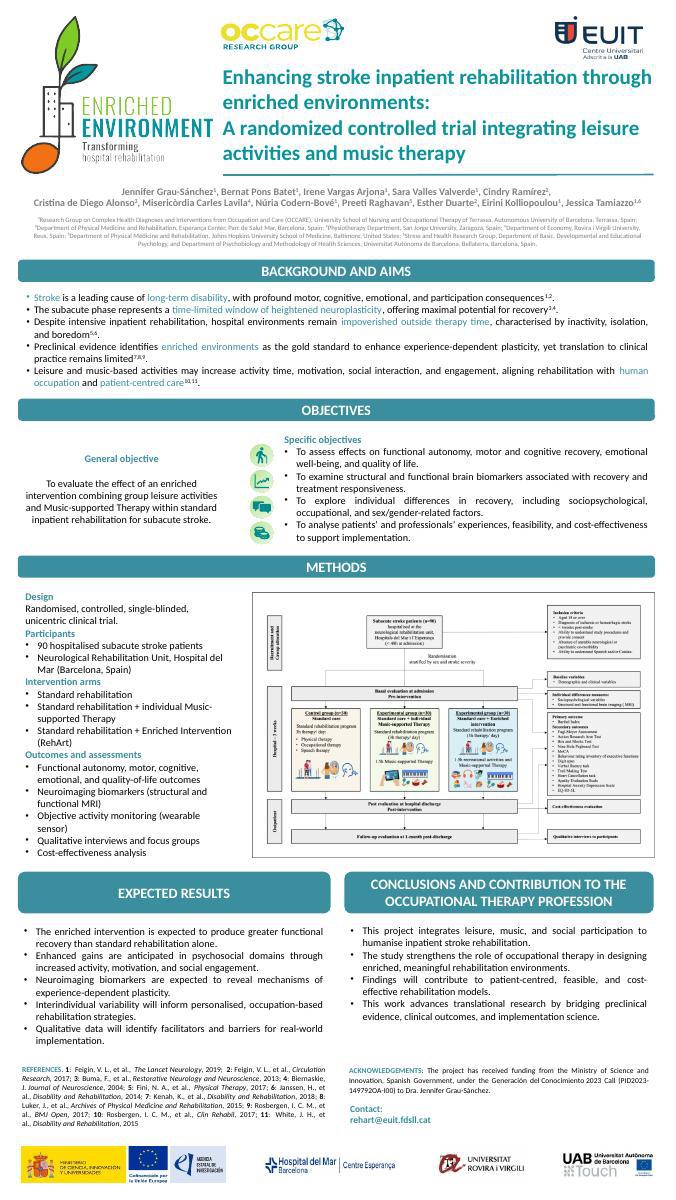
A randomized controlled trial is being conducted involving 90 subacute stroke individuals hospitalized in a neurological rehabilitation unit. Participants are randomly assigned to (1) standard rehabilitation, (2) standard rehabilitation plus individual music therapy, or (3) standard rehabilitation plus an enriched intervention combining group leisure activities with music therapy. Functional, cognitive, emotional, and quality-of-life outcomes are assessed before and after the intervention, and at one-month follow-up. Neuroimaging is used to evaluate brain plasticity biomarkers for recovery. Additionally, clients’ experiences are explored through qualitative interviews and a cost-effectiveness analysis is being conducted.
Results:
It is expected that the enriched intervention will significantly enhance clients’ recovery compared to standard rehabilitation. Individual differences in the recovery response will provide insights for personalized interventions, supporting occupational therapy’s role in fostering engaging, patient-centered rehabilitation.
Conclusion / Contribution to the occupational therapy profession:
This study highlights the value of integrating cultural and occupational aspects to humanize and enrich rehabilitation environments, promoting patient-centered, cost-effective strategies that enhance recovery post-stroke.