
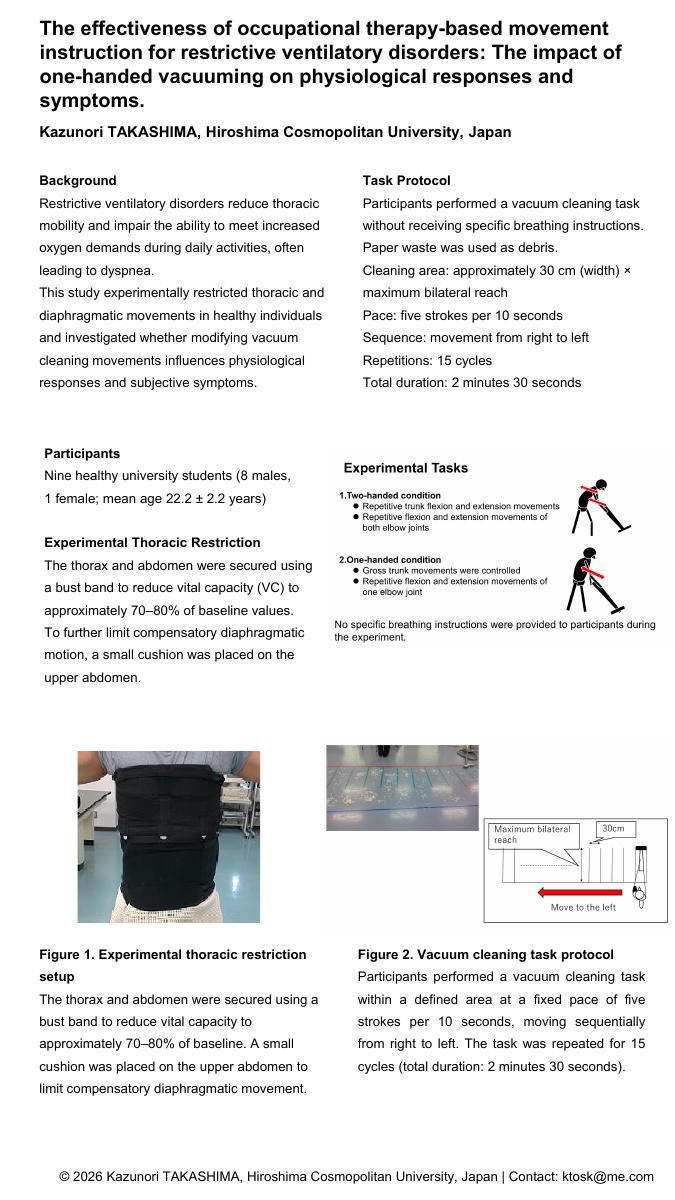
Background: Respiratory diseases such as chronic obstructive pulmonary disease (COPD) and lung cancer significantly impact instrumental activities of daily living (IADL), requiring interventions to improve quality of life (QOL). Individuals with restrictive ventilatory disorders experience increased respiratory effort during daily tasks, leading to dyspnea and fatigue. This study examines the physiological and subjective effects of modifying vacuuming techniques from two-handed to one-handed use under restricted thoracic and diaphragmatic movement, simulating conditions found in patients with restrictive lung diseases.
Methods: Nine healthy participants (8 males, 1 female; mean age 22.2±2.2 years) voluntarily participated. A chest-abdominal restraint was applied to limit thoracoabdominal motion, and participants performed vacuuming in two conditions: both-handed (BH group) and one-handed (OH group). Measurements included oxygen consumption (VO2, ml/min), respiratory rate (RR, n/min), heart rate (HR, bpm), and perceived exertion using a modified Borg scale. Changes before and after movement modification were analyzed.
Results: After restriction, %VC decreased from 131.0±15.0% to 92.4±8.0%. Compared to BH, OH showed significantly lower VO2 (609.7±140.8 vs. 747.9±180.3 ml/min) and RR (34.5±7.6 vs. 39.3±9.4 n/min), indicating reduced respiratory effort. HR decreased in six and increased in three participants, while Borg scores decreased in four, remained unchanged in four, and increased in one.
Conclusion: Modifying vacuuming tasks to one-handed use reduced cardiopulmonary load and respiratory effort compared to both-handed use under thoracic restriction. BH likely increased reliance on accessory respiratory muscles due to reduced thoracic mobility, while OH preserved movement, improving breathing efficiency. These findings highlight the potential benefits of occupational therapy-based task modifications in alleviating dyspnea and optimizing energy conservation in patients with restrictive ventilatory disorders.