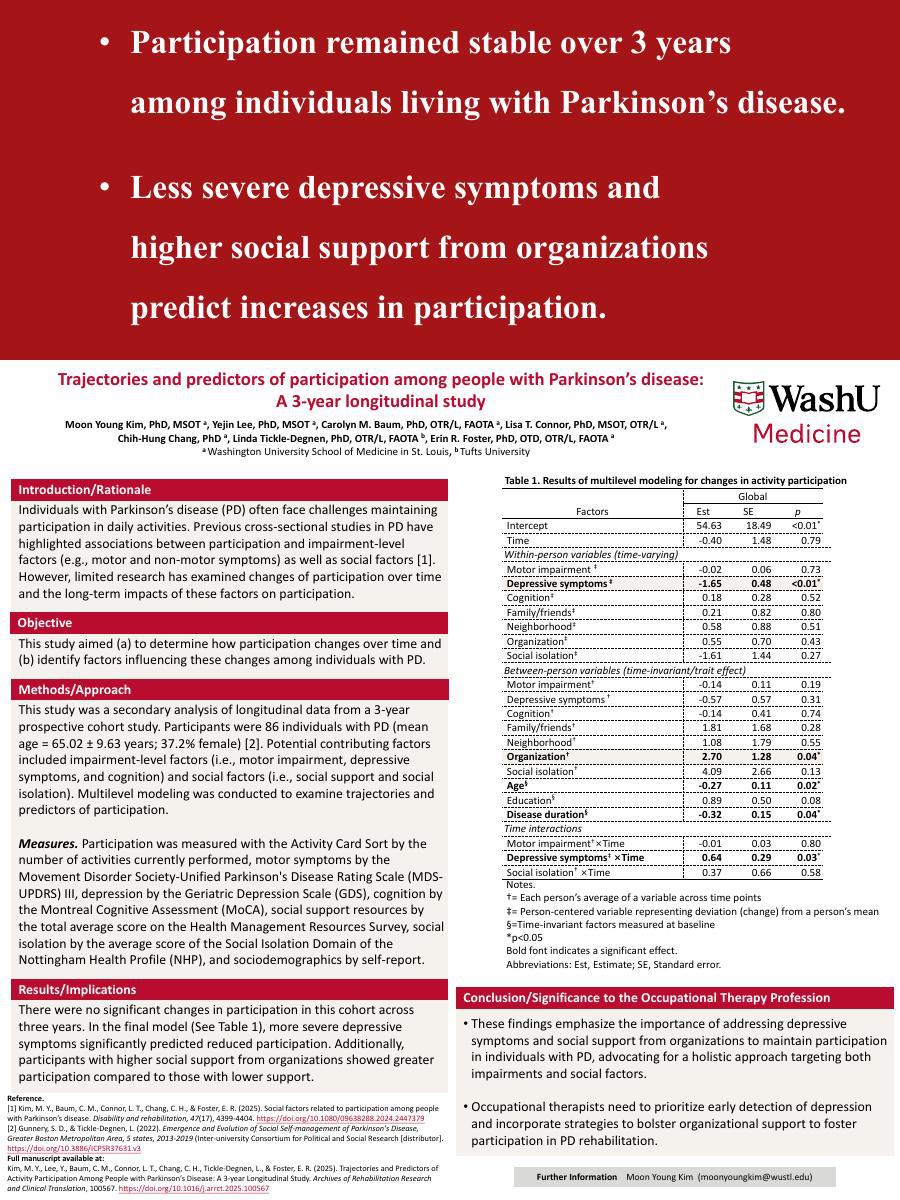
Introduction/Rationale: Individuals with Parkinson’s disease (PD) often face challenges maintaining participation in daily activities. Previous cross-sectional studies in PD have highlighted associations between participation and impairment-level factors (e.g., motor and non-motor symptoms) as well as social factors. However, limited research has examined changes of participation over time and the long-term impacts of these factors on participation.
Objectives: This study aimed to determine how participation changes over time and identify factors influencing these changes among individuals with PD.
Methods/Approach: This study was a secondary analysis of longitudinal data from a 3-year prospective cohort study. Participants were 86 individuals with PD (mean age = 65.02 ± 9.63 years; 37.2% female). Participation was measured with the Activity Card Sort by the number of activities currently performed. Potential contributing factors included impairment-level factors (i.e., motor impairment, depressive symptoms, and cognition) and social factors (i.e., social support and social isolation). Multilevel modeling was conducted to examine trajectories and predictors of participation.
Results/Implications: There were no significant changes in participation in this cohort across three years. In the final model, more severe depressive symptoms significantly predicted reduced participation (β=-1.65, p<0.01). Additionally, participants with higher social support from organizations showed greater participation compared to those with lower support (β=2.70, p=0.04).
Conclusion/Significance to the Occupational Therapy Profession: These findings emphasize the importance of addressing depressive symptoms and social support from organizations to maintain participation in individuals with PD, advocating for a holistic approach targeting both impairments and social factors. Occupational therapists need to prioritize early detection of depression and incorporate strategies to bolster organizational support to foster participation in PD rehabilitation.
