
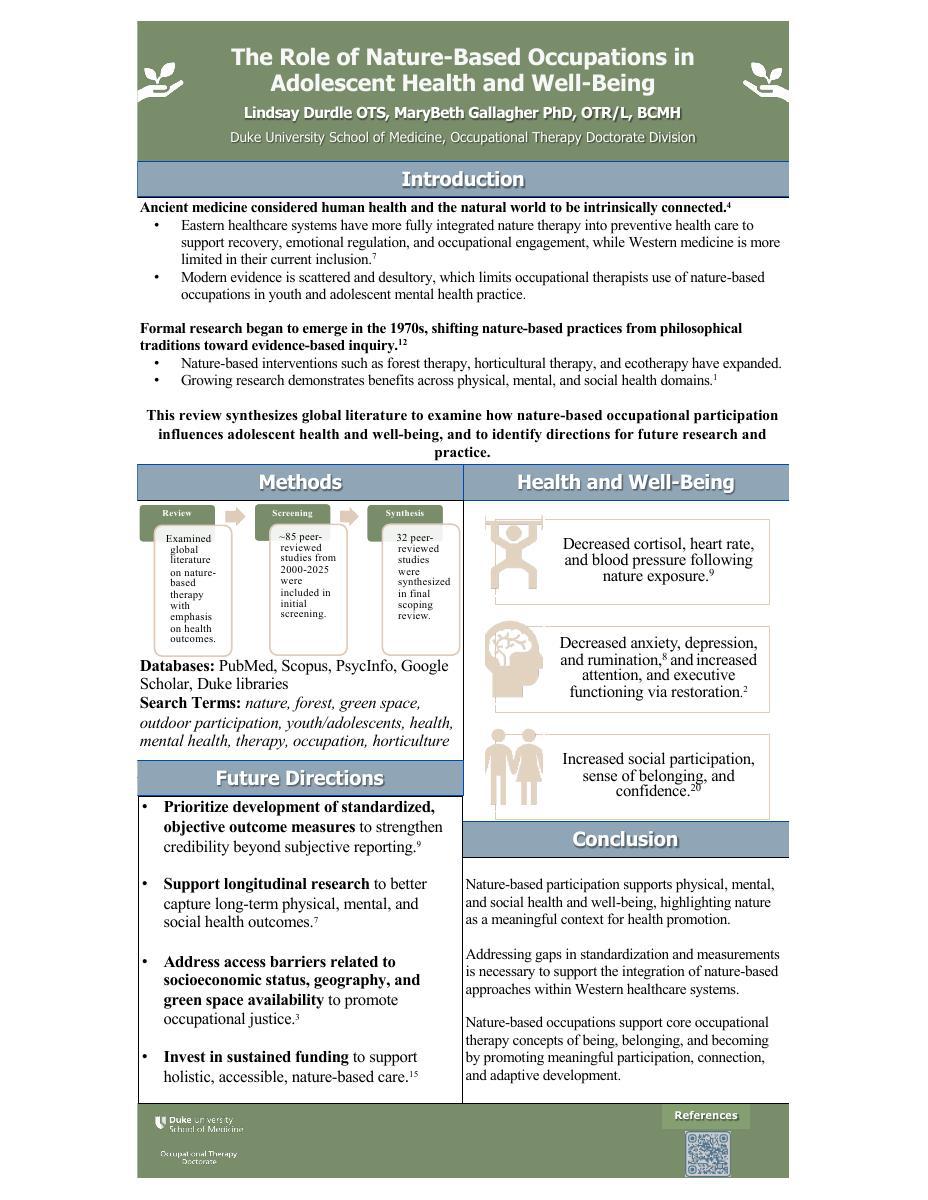
Introduction: The impact of nature-based occupational participation on adolescent health and well-being emphasizes effects on physical, mental, and social development. Historically rooted in ancient medicine, modern research also provides evidence supporting its benefits. Structured outdoor occupations reduce stress, enhance emotional regulation, and foster connections. While Eastern medicine has long integrated these approaches, Western medicine has been slower to adopt them. Understanding the effectiveness of and barriers to nature-based occupations is essential to inspire change to existing services.
Objectives: This review paper will educate participants on the impact of nature-based occupational participation on adolescent health and well-being. Specifically, it highlights how nature-based interventions influence physical health, mental health, and social participation while also identifying existing gaps in research that if explored, innovate a future for nature-based occupations in Western practice.
Methods: A scoping review of existing nature-based therapy literature was conducted, exploring studies on forest therapy, horticultural therapy, nature-based education, and ecotherapy. Specifically, sought were measurable health outcomes, frameworks, and barriers to accessibility. Further, gaps in research, including a lack of assessment tools and longitudinal studies, were identified.
Practice Implications: Findings indicate that nature-based participation reduces stress, improves emotional regulation, enhances immune function, increases physical activity, and strengthens social connections. However, limited quantitative assessments and long-term studies restrict integration into mainstream Western healthcare. Occupational therapists can advocate for structured nature-based interventions, promote accessibility, and develop standardized evaluations.
Conclusion: Nature-based therapy presents an innovative avenue for enhancing adolescent health and well-being using a holistic approach to promote participation and development. Addressing current research gaps will support the integration of nature-based interventions into practice, expanding therapeutic options for adolescent populations.