
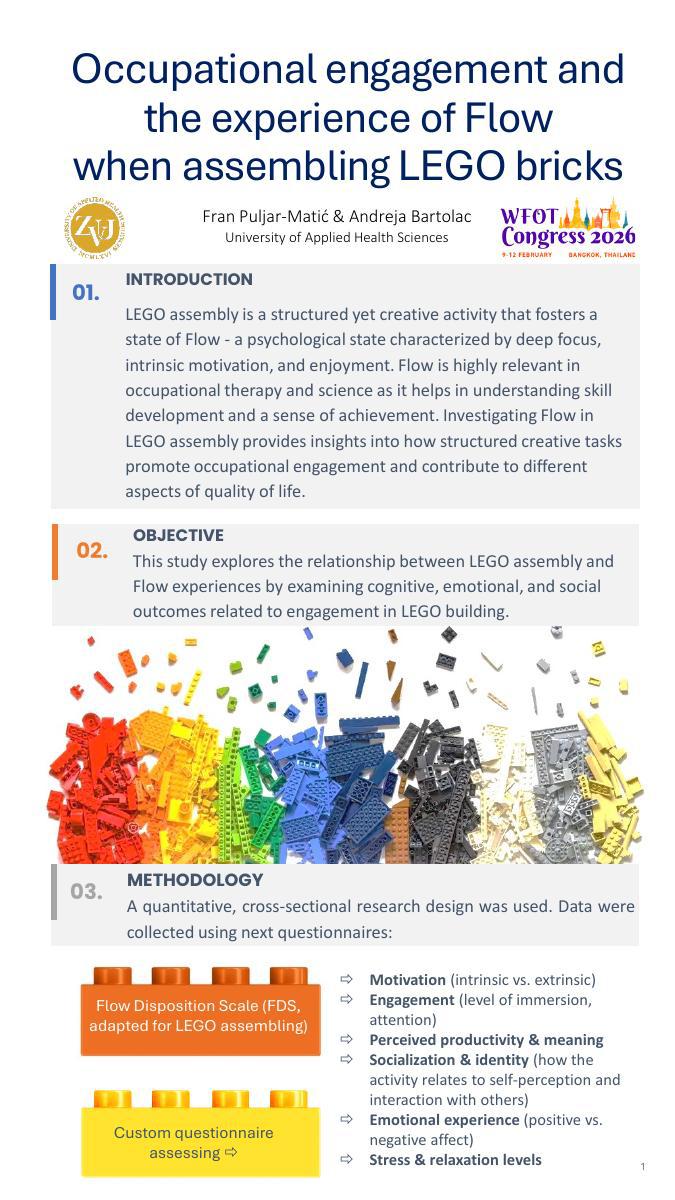
Introduction / Rationale: LEGO assembly is a structured yet creative activity that fosters Flow—a psychological state of deep focus, intrinsic motivation, and enjoyment. Flow is highly relevant to occupational therapy and science, as it provides insights into skill development and a sense of achievement. Investigating Flow in LEGO assembly helps understand how structured creative tasks promote occupational engagement and enhance quality of life.
Objectives: This study examines the relationship between LEGO assembly and Flow experiences, focusing on cognitive, emotional, and social aspects of engagement.
Methods / Approach: A cross-sectional quantitative study was conducted using the Flow Disposition Scale (FDS, adapted for LEGO assembly) and a custom questionnaire assessing occupational engagement, identity, emotions, and stress/relaxation. The study included 91 participants (52% male) of diverse ages and experience levels, recruited through online LEGO communities via snowball sampling. Descriptive statistics summarized participant characteristics, while correlation analyses explored relationships between Flow, engagement, motivation, identity, and demographic factors.
Results / Practice Implications: Participants reported a heightened Flow state during LEGO assembly (M = 4.25, SD = 0.56). Flow significantly and positively correlated with engagement and motivation. Most participants reported feeling immersed in the experience, focused, creative, and calm, while 87% stated that LEGO assembly contributes to stress reduction or relaxation. Additionally, 73% believed that building with LEGO adds to their personal identity (e.g., "I am creative," "I am a problem-solver"). Demographic differences in Flow and engagement are discussed.
Conclusion / Contribution to the occupational therapy profession: Understanding Flow in LEGO assembly can help occupational therapists design interventions that enhance motivation, attention, and intrinsic enjoyment, ultimately optimizing therapeutic outcomes.