
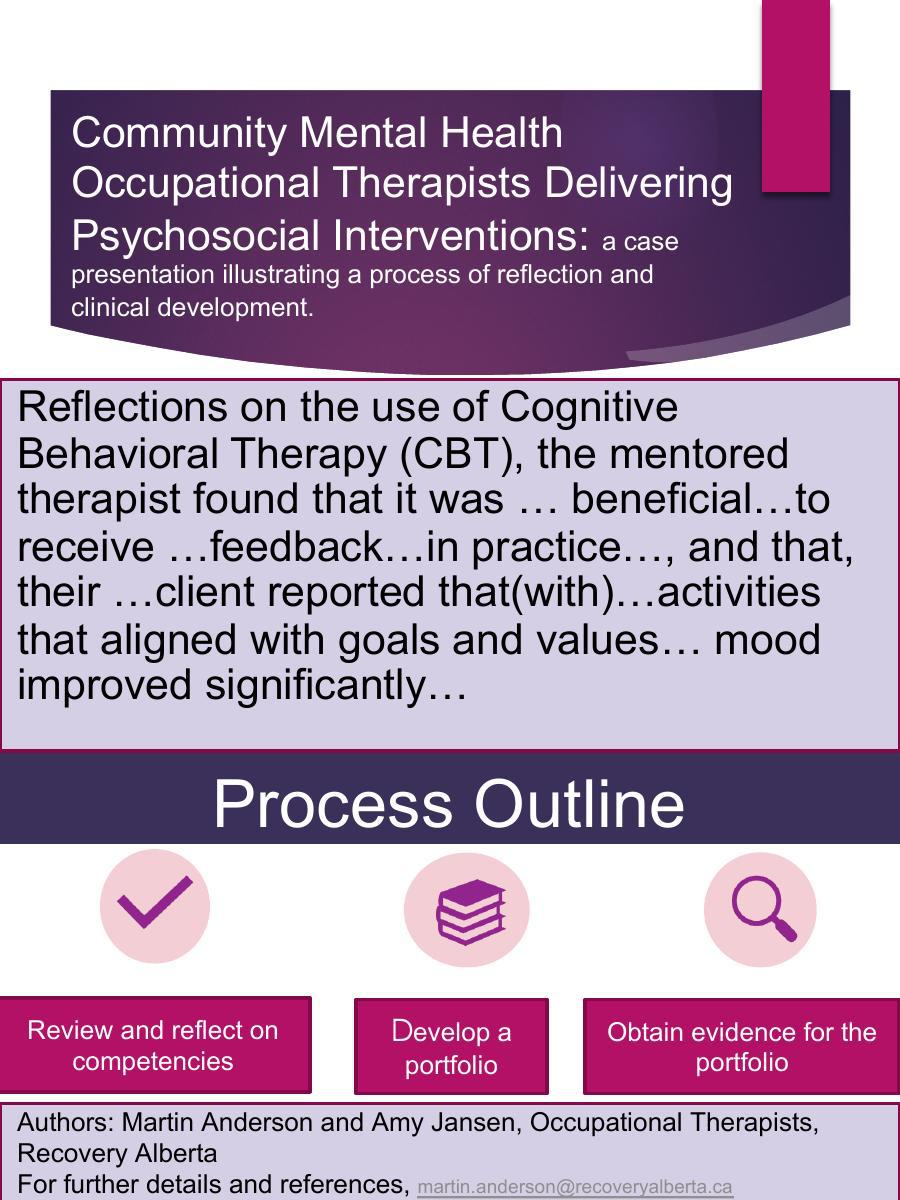
Rationale: A group of rural Canadian mental health occupational therapists worked to validate a curriculum to support practitioners in community mental health in advancing competence in delivering psychosocial interventions. Peer mentorship was identified as one of the tools within the curriculum. The curriculum is based on the work of Sperry and Sperry (2023) and their framework for competencies for practice of psychotherapy has been used to structure reflective conversations within the context of clinical mentorship.
Objectives: The poster presentation will provide an opportunity for occupational therapists to share in the experience of a mentorship process and a reflective professional development process that has informed the practice development of an occupational therapist during the first year of her work as a rural community mental health therapist.
Methods: Branch, and Paranjape (2002) have described the role of feedback and reflection in professional clinical development and these ideas guided the reflections on mentorship. The reflective process using the identified competency framework and regular mentorship sessions were the primary methods. Reflective documentation focused on clinical cases and was framed by the competency framework. These processes are the primary sources of information for the case presentation.
Results: The experience of the mentorship process from the perspective of the mentor and mentee are described along with examples of how the process impacted practice and both therapists confidence in their competence.
Conclusions: A structured process of reflective clinical development based on self reflection and feedback is intended to pave the way to competent practice. The process has supported the two participants in advancing their practice as practitioner and mentor.