Introduction / Rationale: Trauma is a widespread public health problem that has no boundaries with regard to age, gender, socioeconomic status, race, ethnicity, geography, or sexual orientation; and is a universal experience for people with mental and substance use disorders.
Much of the literature on trauma is related to exposure in early childhood and the impact of adversity that persists throughout one’s lifespan, commonly described as adverse childhood experiences (ACEs).The impact of traumatic events as well as ACEs is a significant public health problem, having an influence on health and wellness, and limiting occupational performance.
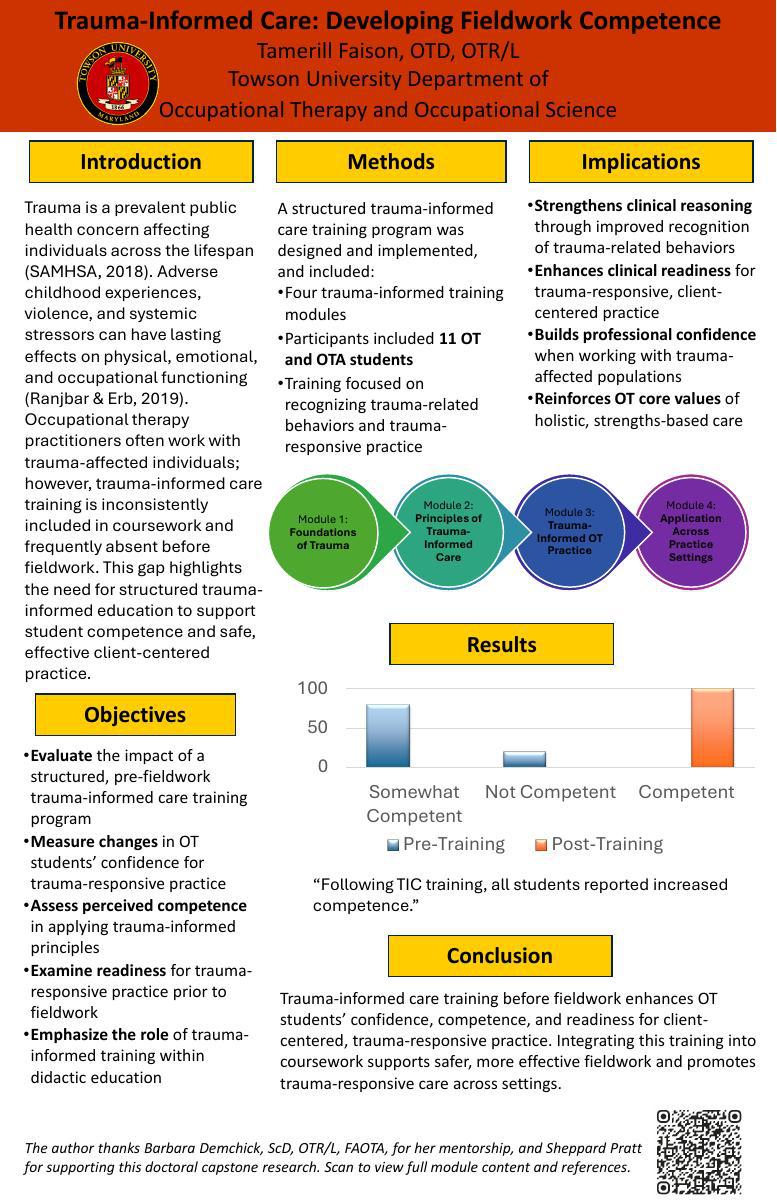
Objectives: The purpose of this program was to highlight the importance of trauma-informed care training for OT students as part of their didactic learning to enhance their skill development and competence level during the fieldwork experience.
Methods / Approach: The primary author developed four trauma-informed care training modules which were presented to 11 OT and OTA students completing their level II fieldwork in a community mental health program. The learning objectives of the didactic sessions focused on recognizing the health risk behaviors associated with trauma and on understanding the benefits of being trauma informed.
Results / Practice Implications: The results showed an increase in the perceived competence and that students’ ability to engage with clients who have experienced trauma can be enhanced by ensuring that sufficient knowledge and training are presented in OT programs prior to fieldwork.
Conclusion / Contribution to the occupational therapy profession: OTPs have a duty to understand the widespread nature and effects of trauma that will be a part of the fabric of the clients they serve.
