
Introduction: Adults with disabilities face substantial challenges in achieving sustainable employment. Vocational training interventions are essential for enhancing work-related skills and promoting workplace adaptation.
Objectives: This scoping review examines various vocational training interventions aimed at enhancing employment outcomes for adults with disabilities, including autism spectrum disorder (ASD), intellectual disabilities, developmental disabilities, brain injuries, and severe mental illness.
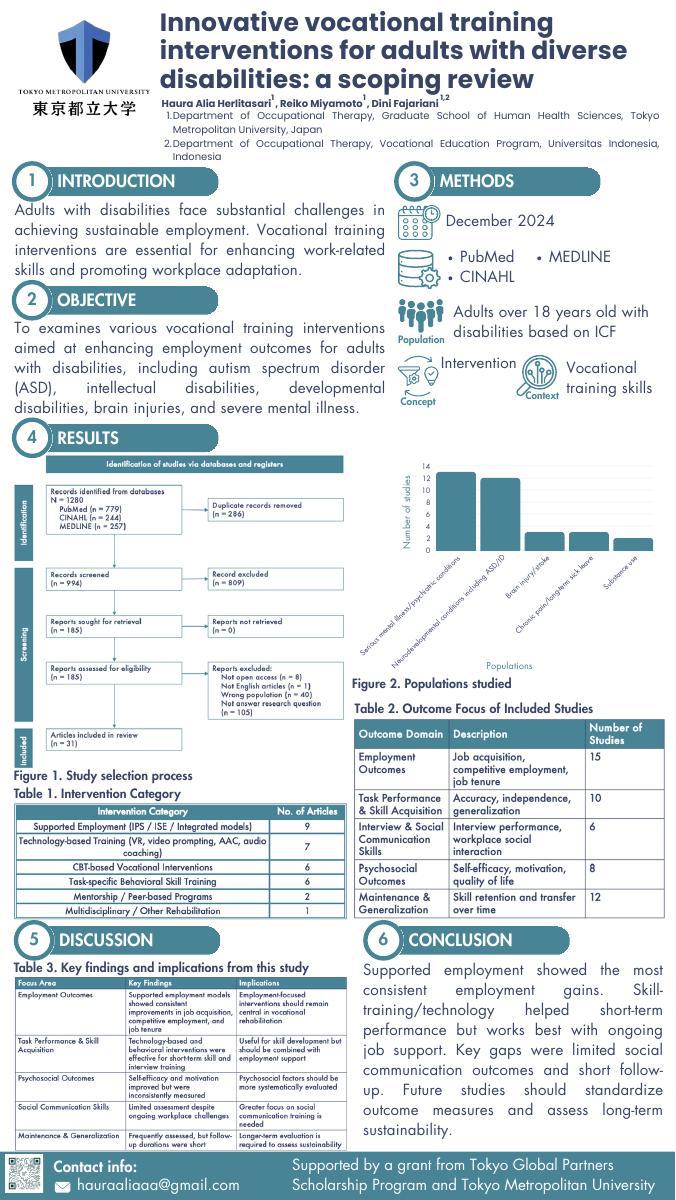
Methods: A systematic search of Web of Science, CINAHL, PubMed, and MEDLINE identified 31 studies employing technological and conventional methods such as Virtual Reality Job Interview Training (VR-JIT), video modelling, cognitive-behavioural therapy (CBT), and mentorship programs.
Results: Indicate that VR-JIT effectively improves interview skills and increases job offers, while video modelling enhances skill acquisition and task performance. Cognitive-behavioural interventions contribute to improved self-efficacy, occupational competence, and reduced self-stigma. Additionally, integrated supported employment models like IPS demonstrate superior employment outcomes compared to conventional approaches. These studies highlight the benefits of personalized coaching, task-specific training, and structured mentorship in promoting social communication and workplace adaptation. However, most interventions lack collaboration with occupational therapists, whose expertise in assessing functional abilities, adapting tasks, and modifying environments is essential.
Conclusion: Future research should integrate occupational therapy principles to optimize skill development, workplace adaptation, and sustainable employment for adults with disabilities. Emphasizing occupational therapists’ involvement can promote inclusive, person-centred approaches that address diverse needs and enhance intervention effectiveness.