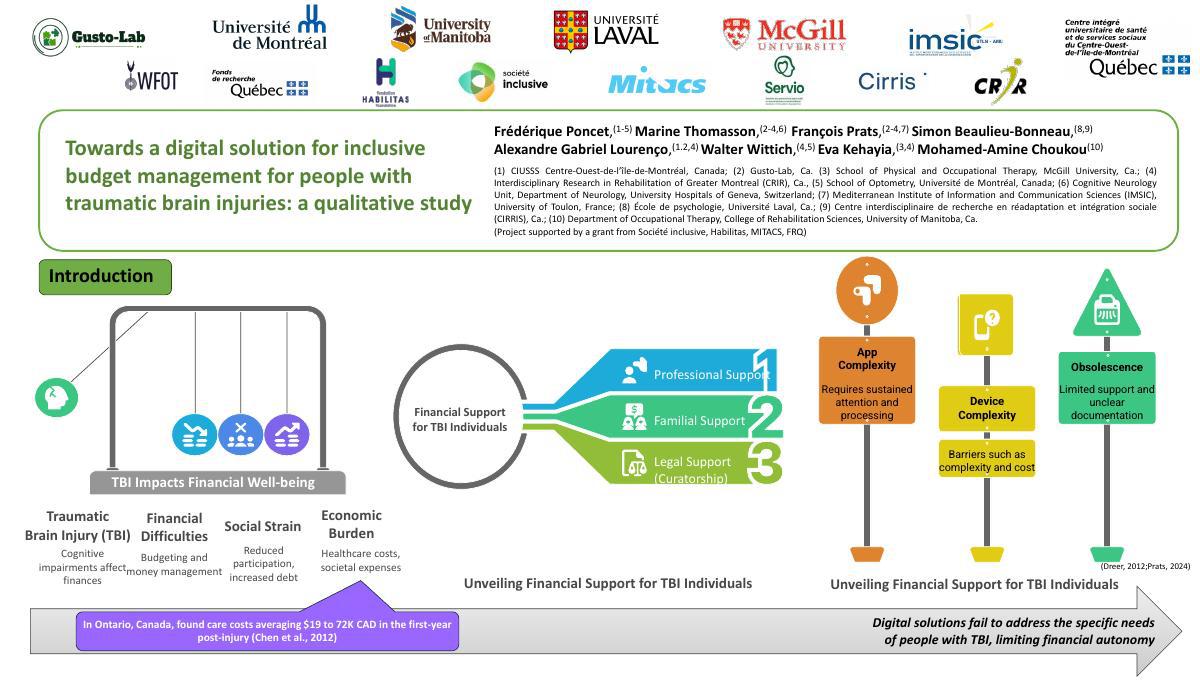
Introduction: Traumtic brain injury (TBI) can lead to significant difficulties with financial management due to cognitive, emotional and environmental issues. Existing digital solutions are often unsuitable for the specific needs of these individuals, limiting their financial autonomy (Dreer, 2012; Prats, 2024). This study aims to identify the key elements for the adoption of an inclusive and accessible digital solution to enable people living with HI to better manage their budget.
Method: A qualitative approach was used with four focus groups (N = 22) involving people with TBI, family carers and educators from a Canadian patient association. The discussions, which were analysed using MAXQDA© software, explored the challenges of daily financial management and the expectations of a digital solution.
Results: Participants identified cognitive deficits (memory and attention problems) as a barrier to managing their finances. Those around them reported problems with anxiety and impulsivity. Low financial literacy, combined with the complexity of the banking system and digital tools, limits access to financial services and increases the risk of debt. Participants also highlighted the need for an intuitive application that combines educational resources, personalised support and adapted features such as reminders, alarms and visual cues.
Conclusion :These findings highlight the need to co-develop digital solutions that integrate simplified interfaces and tools that promote support and interaction. Such an approach could increase the financial independence of people with TBI, reduce the burden on carers and improve their quality of life (Koller, 2016). This study provides concrete recommendations for rehabilitation professionals and developers of digital solutions to adapt these tools to the specific needs of this population.
