
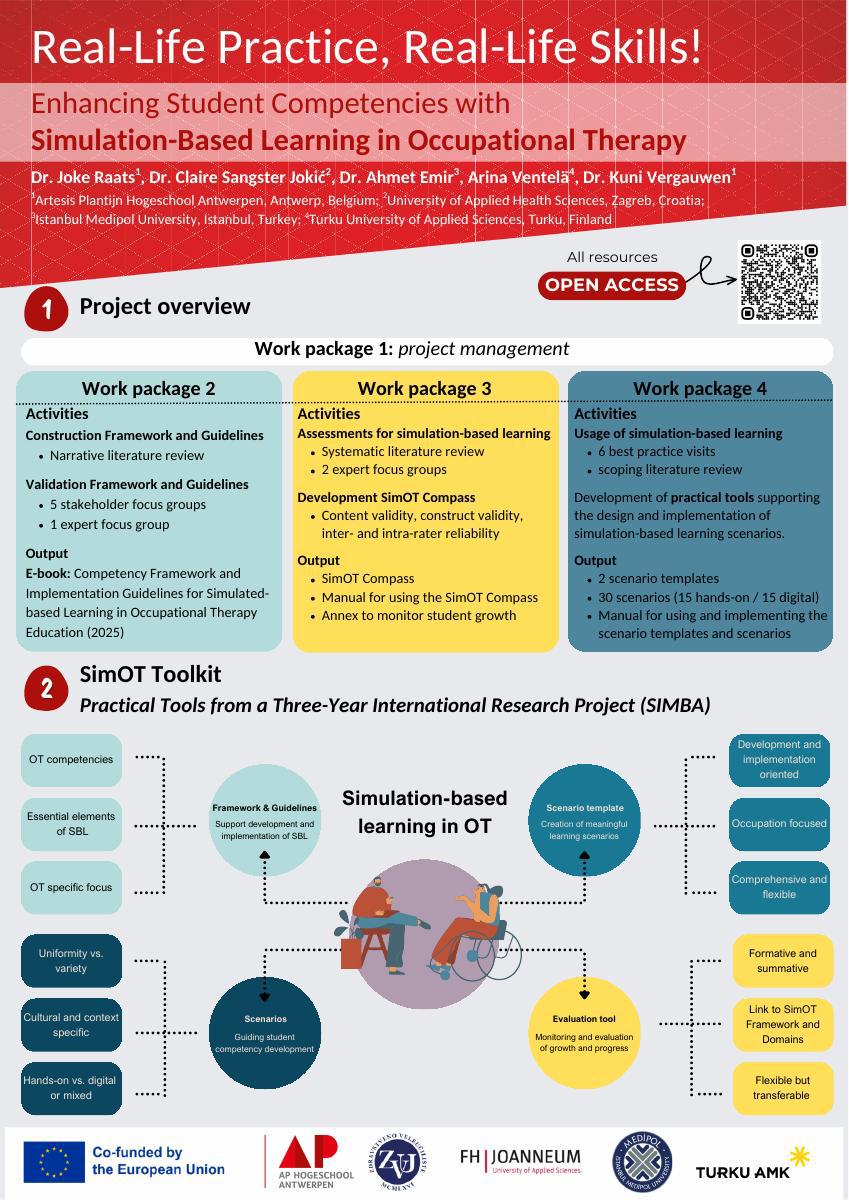
Introduction: Simulation-based learning (SBL) is widely used in medical and nursing education and proven to enhance students’ competencies, provide additional learning opportunities beyond fieldwork and better prepare students for real-life practice. Curricula that incorporate authentic learning environments and continuous assessment are more effective in preparing students for practice, motivating learning, and supporting lifelong professional development. While the use of SBL in occupational therapy (OT) education is growing, its structure and implementation remains undefined.
Objectives: The SIMBA project, a collaboration of European higher education organizations, aimed to integrate SBL across five OT education programmes. The initiative focused on creating a clear framework and guidelines for the development and implementation of SBL, as well as developing tools for its design, delivery, and evaluation.
Approach: The three key outcomes of SIMBA are: a professional competency framework and guidelines for SBL development and implementation, informed by literature review, stakeholder and expert focus groups; a valid and reliable SBL assessment tool, developed through a systematic review, stakeholder and expert consultation; practical tools for developing and implementing hands-on and digital SBL scenarios, shaped by best practice visits, a scoping literature review, and stakeholder and expert feedback.
Practice implications: SIMBA offers free resources to guide OT educators in implementing high quality SBL. Embedding SBL into OT curricula will support the development of skilled and confident practitioners, enhancing their professional readiness.
Conclusion: This approach will enhance the competencies of new OT practitioners, ultimately improving the quality of care for OT users, benefiting both professionals and clients.