
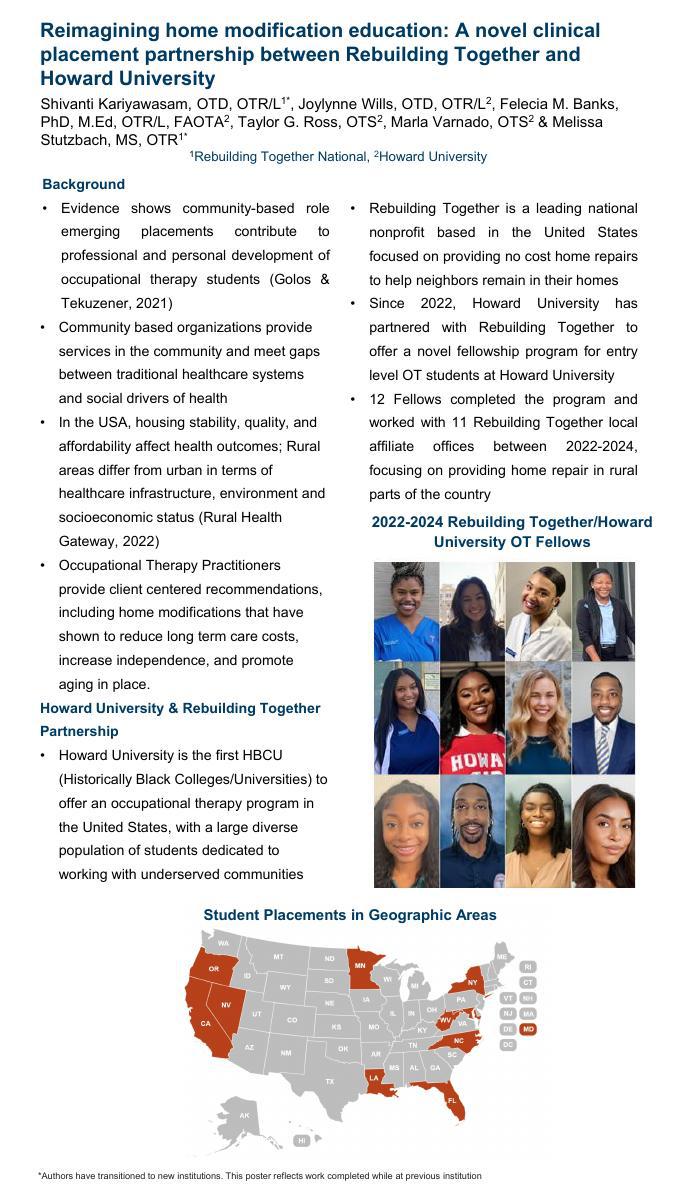
Introduction/Rationale: Aging in place (AIP) is a priority for 77% of adults over 50 globally (Bookman, 2008; Ratnayake et al., 2022), yet rising care facility costs create financial and social burdens for families and healthcare systems. Programs supporting AIP can yield cost savings and enhance quality of life (HUD, 2013). Rebuilding Together (RT), a U.S. national nonprofit focused on home repair, partnered with Howard University’s Occupational Therapy (OT) Department to establish a novel clinical placement program. This initiative expands student exposure to home modifications and rural health, preparing them for emerging OT roles.
Objectives: This presentation describes an innovative academic-community partnership aimed at:
1. Enhancing OT students’ knowledge of home modifications and AIP strategies.
2. Providing hands-on experience in rural, underserved communities.
3. Evaluating student growth in leadership, clinical skills, professional development, and community-based practice.
Methods/Approach: Since 2022, OT students have engaged in clinical placement experiences with RT affiliates, completing asset mapping, site visits, and case study coaching presentations. Students trained affiliates in OT principles to improve their service delivery. Program evaluation assessed student leadership development, curriculum alignment, and affiliate engagement.
Results/Practice Implications: All students reported increased leadership skills, understanding of community context, and professional interest in home modifications. Affiliates demonstrated improved client-centered service delivery, better home accessibility solutions, and new lasting partnerships with local healthcare systems.
Conclusion/ Contribution to the occupational therapy profession: This model demonstrates how academic-community collaborations can expand and enhance OT competencies in home modifications and community health, providing a replicable framework for integrating OT education with nonprofit initiatives to foster workplace development in emerging practice areas.