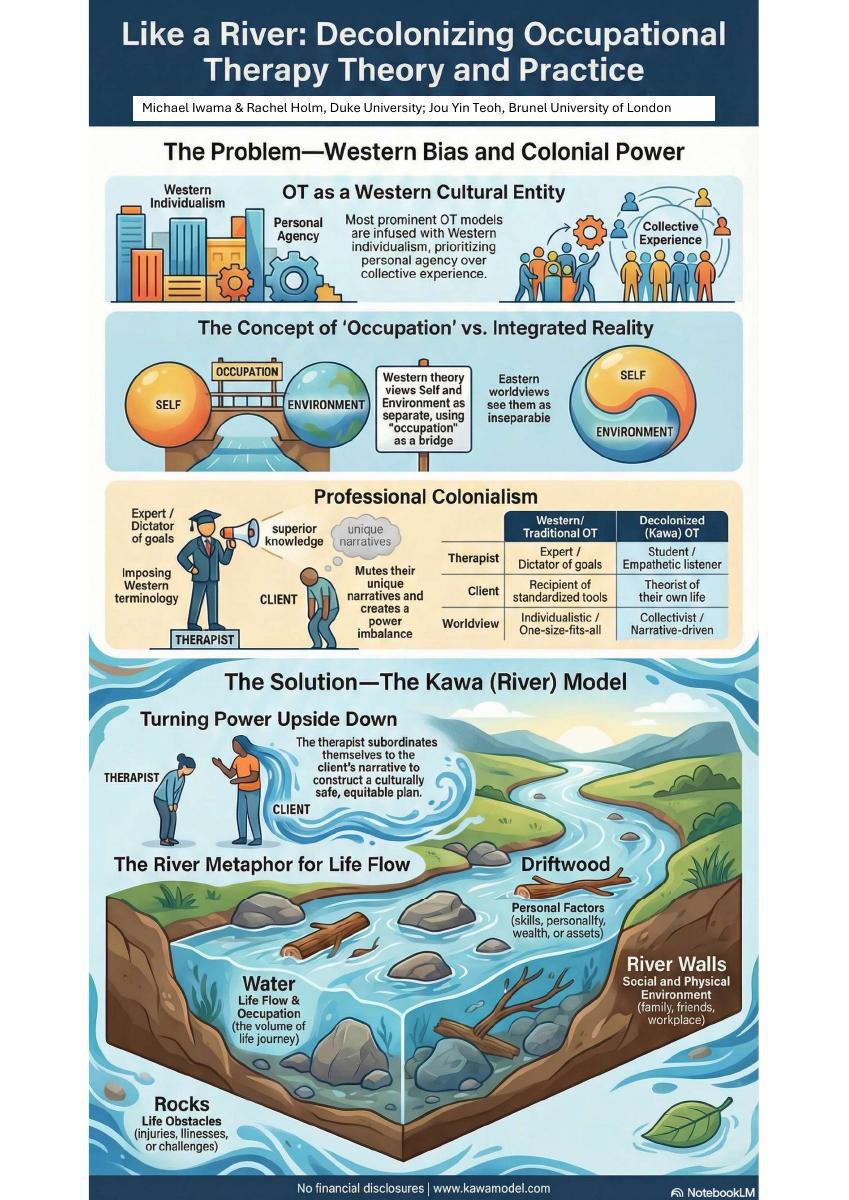
Introduction / Rationale: Traditional occupational therapy theory and models are cultural products mainly originating in the English-speaking 'western' world, and therefore embody the cultural worldviews and social norms of these regions. As occupational therapy continues to make its way to new frontiers in the world, its theories and practices can often run into challenges. Not only are the concepts and frameworks difficult to reconcile in different cultural contexts but the power dynamics embedded in the models can create confusion for both therapist and client. For occupational therapy to thrive in this millenium, new theory, models and methods must be developed and explored, to render practices that are meaningful, safe and effective for all.
Objectives: The Kawa Model represents a new paradigm in occupational therapy theory. This presentation will demonstrate how occupational therapy models and theory are changing to increase cultural relevance to a diverse world.
Methods/Approach: the structure and concepts of the Kawa model will be presented, augmented by case studies form different areas of the world.
Results/Practice Implications: Such new models and theory will advance occupational therapy practice to be more culturally relevant and safe for a diverse World.
Contribution to the occupational therapy profession: The Kawa Model heralds the profession's move into the postmodern era, making occupational therapy more relevant, safe to meet the challenges and needs of an ever-changing world.
