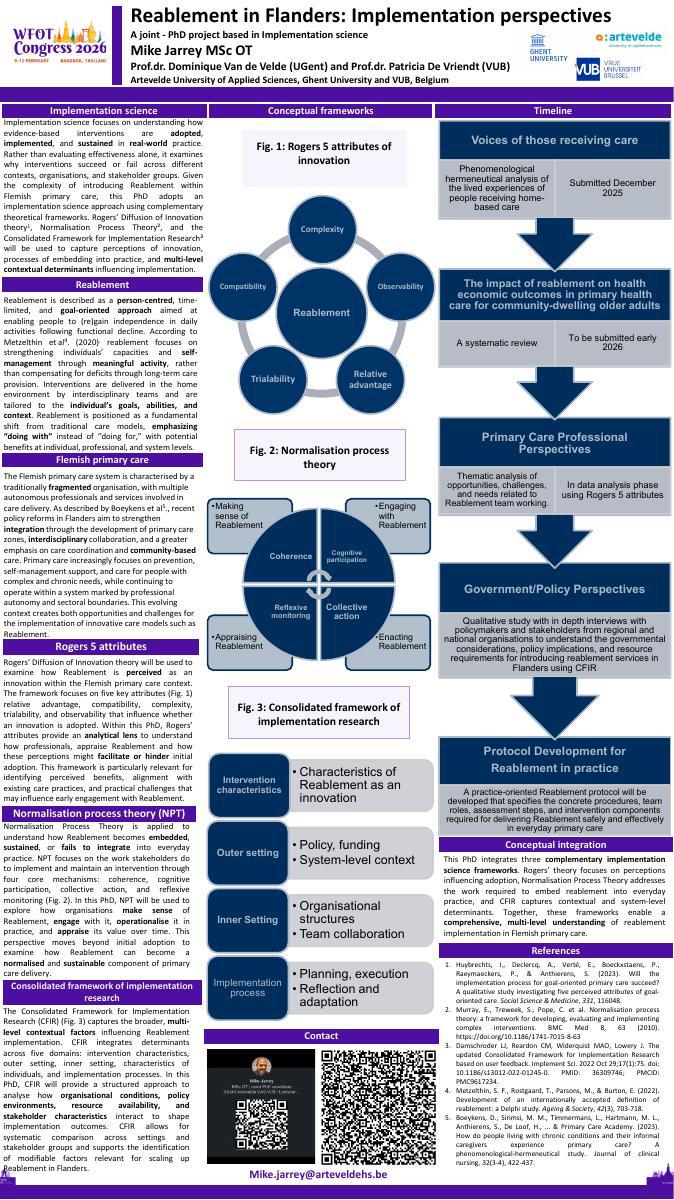
Introduction: Reablement is an emerging approach aimed at enhancing older adults' independence and quality of life through time-limited, goal-oriented support. While successfully integrated into healthcare systems in other regions, the implementation of Reablement in Flanders remains in its early stages. Understanding the perspectives of primary care professionals is crucial for guiding effective adoption and sustainable practice.
Method: A thematic analysis was completed looking at interviews and focus groups with professionals in the Flemish context which could offer a perspective of Reablements possible implementation in Flanders. The analysis was guided by Rogers' Diffusion of Innovation theory, particularly examining the five attributes influencing adoption: relative advantage, compatibility, complexity, trialability, and observability.
Practice implications: Preliminary findings indicate a strong perceived alignment between Reablement principles and professionals’ values of promoting autonomy. However, challenges emerged around role clarity, interprofessional collaboration, and the feasibility of trialing Reablement within existing care structures. Strategies such as tailored training and phased implementation were identified as potential solutions to enhance uptake.
Conclusion/Contribution: Reablement presents a promising shift toward more enabling, client-centered care in Flanders. Occupational therapists are well-positioned to lead this transition, leveraging their expertise in activity analysis and goal-oriented interventions. Addressing implementation barriers collaboratively can enhance the sustainability and impact of Reablement, contributing to more responsive and empowering primary care services.
