
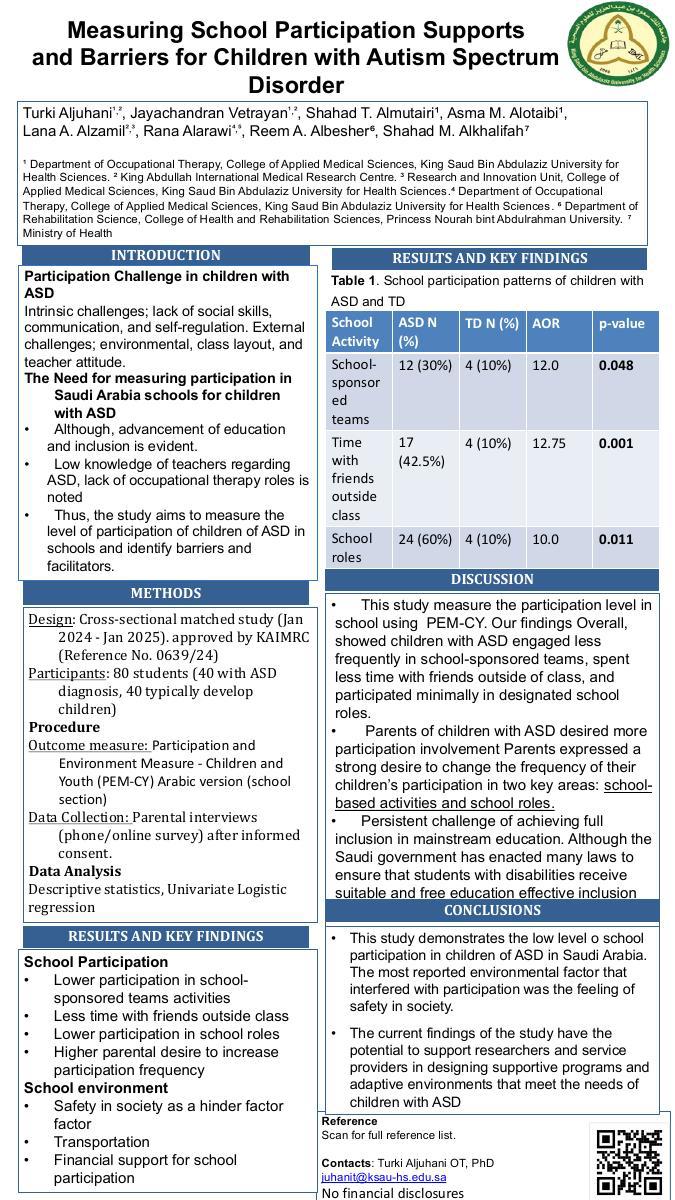
Objectives: Autism Spectrum Disorder (ASD) is a neurodevelopmental condition characterized by challenges in social communication and repetitive behaviors. Understanding the factors that affect school participation of children with ASD is increasingly important. School is a critical environment for the development of social skills and academic growth, yet many students with ASD may face barriers that hinder their full engagement. This study aims to measure students with ASD’s level of participations in school as well as identify the supports and barriers influencing school participation.
Methods: A cross-sectional study was conducted from January 2024 to January 2025, involving two groups totaling 80 participants who are students aged 6–15: 40 students diagnosed with ASD and 40 matched students without ASD who attended inclusive public or private schools. Data was collected using a validated questionnaire, the Participation and Environment Measure—Children and Youth (PME-CY).
Results: Children with ASD experience low to no participation in three areas: school-sponsored teams (P=0.048), spending time with friends outside of class (P=0.001), and participating in school roles (P=0.011) compared to the typical developing peers. Parents of children with ASD also identify a desire to increase their children engagement in both school activities and school roles (P = 0.04, P= 0.01).
Conclusion: This study reveals significant barriers and supports that affect school participation for students with ASD. While students with ASD engage in structured activities, they face challenges in social interactions and classroom participation. Supportive environments, including positive staff attitudes and appropriate layouts, enhance engagement. Addressing financial and resource barriers is crucial for fostering inclusivity and improving educational experiences for students with ASD.
Abbreviations: Autism Spectrum Disorders (ASD), Barriers, Environment, School Participation, Participation