
Introduction: People with chronic mental illness (CMI) have compromised physical fitness that can impact their health and daily functioning. Evidence of mental health occupational therapy that results in better physical outcomes for this vulnerable client population is imperative.
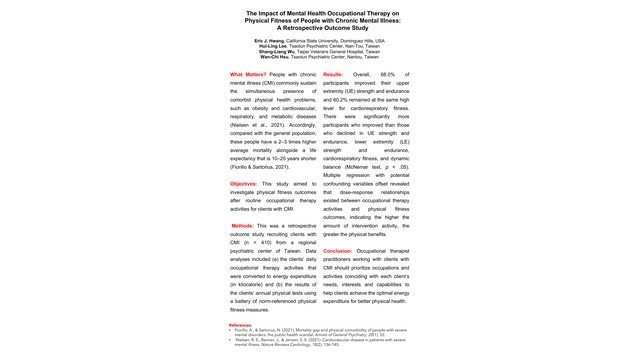
Objectives: This study aimed to investigate physical fitness outcomes after routine occupational therapy activities for clients with CMI.
Methods: This was a retrospective outcome study recruiting clients with CMI (n = 410) from a regional psychiatric center of Taiwan. Data analyses included (a) the clients’ daily occupational therapy activities that were converted to energy expenditure (in kilocalorie) and (b) the results of the clients’ annual physical tests using a battery of norm-referenced physical fitness measures.
Results: Overall, 68.0% of participants improved their upper extremity (UE) strength and endurance and 60.2% remained at the same high level for cardiorespiratory fitness. There were significantly more participants who improved than those who declined in UE strength and endurance, lower extremity (LE) strength and endurance, cardiorespiratory fitness, and dynamic balance (McNemar test, p < .05). Multiple regression with potential confounding variables offset revealed that dose-response relationships existed between occupational therapy activities and physical fitness outcomes, indicating the higher the amount of intervention activity, the greater the physical benefits.
Conclusion: Occupational therapist practitioners working with clients with CMI should prioritize occupations and activities coinciding with each client’s needs, interests and capabilities to help clients achieve the optimal energy expenditure for better physical health. To the best of our knowledge, this was the first study that corroborated the physical benefits of occupational therapy mental health service through the examination of core fitness markers and quantified occupational therapy activities.