
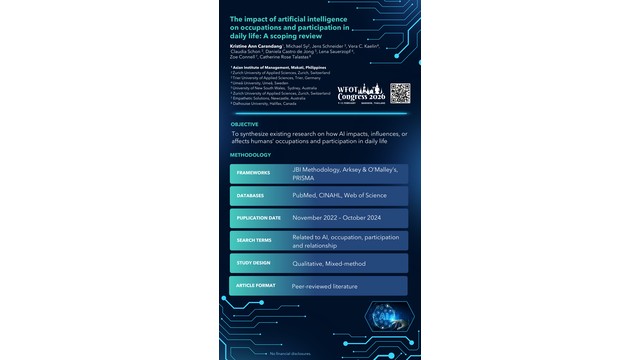
Objectives: Tools powered by artificial intelligence (AI) have been created to optimize efficiency and convenience of daily living. However, the integration of AI also raises ethical and socio-legal concerns that may affect individuals, communities and societies. This scoping review aims to synthesize existing research on how AI impacts, influences, or affects humans’ occupations and participation in daily life.
Methods: Following Joanna Briggs Institute (JBI) methodology reporting format and the Preferred Reporting Items for Systematic reviews and Meta-Analyses (PRISMA) framework, this scoping review maps peer-reviewed, qualitative articles (focused on the research aim) from various databases including PubMed, CINAHL, and Web of Science. Only articles published between November 2022 and September 2024 were included. This review was registered with the Open Science Frameworkin December 2024.
Results: A total of 3,952 studies were retrieved. With 784 duplicates excluded, 3,168 articles were screened. The review findings provide a refined perspective on how integrating AI has shaped how humans live and engage in occupations, including those occupations which might be seen as unethical, illicit or clandestine. We found studies describing how AI facilitates or hinders occupational performance, from making participation more efficient, easier and convenient to its drawbacks like diminishing human interactions and accentuating social issues.
Conclusion: Exploring the implications of AI on occupational performance, engagement and participation can inform the scope of practice among occupational therapists especially when supporting clients in occupational therapy interventions.