
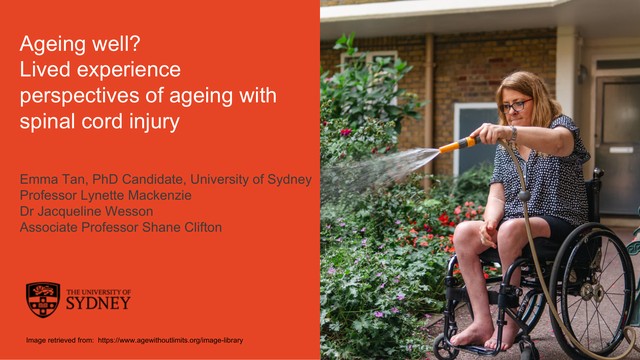
Introduction: The population ageing with Spinal Cord Injury (SCI) is increasing, yet knowledge about their ageing experience remains limited. The impact of age-related functional changes on maintaining quality of life and participation in social, productivity and leisure activities has important consequences both from individual and socio-economic perspectives. In Australia, inconsistencies between aged care and disability policy provide additional challenges for those with SCI to age well.
Objectives: To explore experiences of ageing from a lived experience perspective, including challenges encountered and supports required to age well, to guide future policy, education and resources for clinical practice.
Methods: Semi-structured interviews (audiotaped and transcribed) with 20 people with SCI above the age of 50, were analysed using thematic analysis. A consumer advisory panel (n=7) with lived experience co-designed the study and reviewed results to ensure relevance.
Results: Consumers identified key issues:
• the physical and psychosocial challenges of ageing;
• the importance of psychological adjustment to ageing well;
• the need for proactive multidisciplinary support;
• challenges presented by disparities in support across funding streams;
• positive benefits of participation in meaningful activity.
Implications: Findings will guide a future Delphi study to develop consensus-based recommendations for improved service provision and support to facilitate people with SCI to age well.
Conclusion: Occupational therapists should advocate and promote meaningful change for this cohort, including modifications to policy and proactive services, funding structures, health resourcing and education, ensuring that people with SCI are able to age well, consistent with their able-bodied peers.