
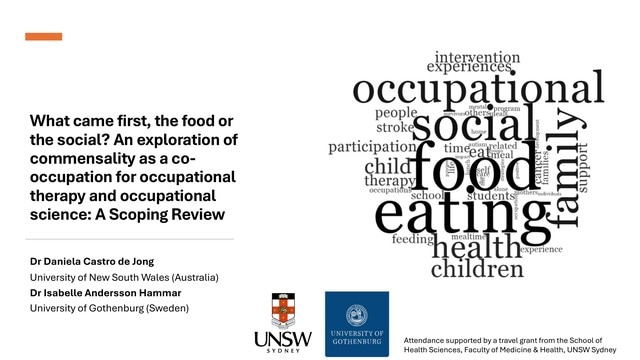
Introduction: Eating and feeding are core occupations for survival. Food related occupations have allowed fine motor and social skills development since ancient times. Commensality explores the social implications of eating with others in a regular and structured manner. While performance and nutritional considerations of eating for growth and development in people have been explored, social aspects of eating have not been equally examined in occupational therapy and occupational science.
Objectives: To explore the use and understanding of commensality as a co-occupation in occupational therapy and occupational science literature.
Methods: Joanna Briggs Institute (JBI) methodology for scoping reviews and PRISMA-ScR guidance. Eight databases were used (Cinahl, Web of Science, Embase, PubMed, Scopus, PsycINFO, SciELO, Cochrane database of systematic reviews). Search terms included “occupational therapy*”, “occupational science”, “co-occupation”, “commensality”, “social eating”, and “eating with others”. OSF Scoping Review protocol registration completed. Trustworthiness strategies include researcher triangulation and thick description of the methods.
Results: Preliminary results show few publications either in occupational therapy or occupational science including the term commensality. Initial findings indicate that social aspects of eating with others have been explored in terms of its impact (positive or negative) in health and wellbeing for specific populations (people living with given medical conditions or within certain cultural contexts). Most of the selected publications were published in the last decade (2015-2025). Final results will be available by the time of the congress.
Conclusion: For occupational therapy, these findings can expand the considerations of how the social aspects of eating can support innovative person-centered approaches for daily occupations in a more situated manner. For occupational science, understanding the implications of commensality will support the growing need to understand co-occupations beyond caregiving.