
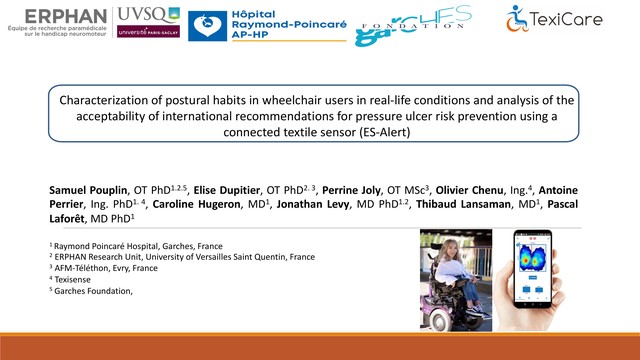
Introduction: In France, over half a million wheelchair users spend most of their day seated, averaging 10-12 hours depending on the wheelchair type. Pressure variability through self-mobilization and electrical functions helps reduce pressure on sensitive areas, but adherence to these recommendations is often inconsistent. Pressure mapping technologies could aid in monitoring daily pressure variability.
Objectives: This study evaluated the impact of the TEXICARE device, which monitors pressure ulcer risk and issues alerts based on international guidelines, on pressure relief behaviors in real-life settings.
Methods: A two-week feasibility study involved three populations of wheelchair users. In the first week, participants used the TEXICARE device at home. In the second week, audible alerts related to sitting pressures or international recommendations were added.
Results: Thirty-six wheelchair users were included. A decrease in the number (p=0.006) and duration (p=0.011) of pressure relief actions was observed during the second week, but audible alerts did not significantly enhance these actions.
Conclusion: The study demonstrated extensive use of the sitting pressure visualization device. However, the audible alerts were largely disregarded, highlighting the need for effective methods to present sitting pressure data to ensure adequate relief durations.